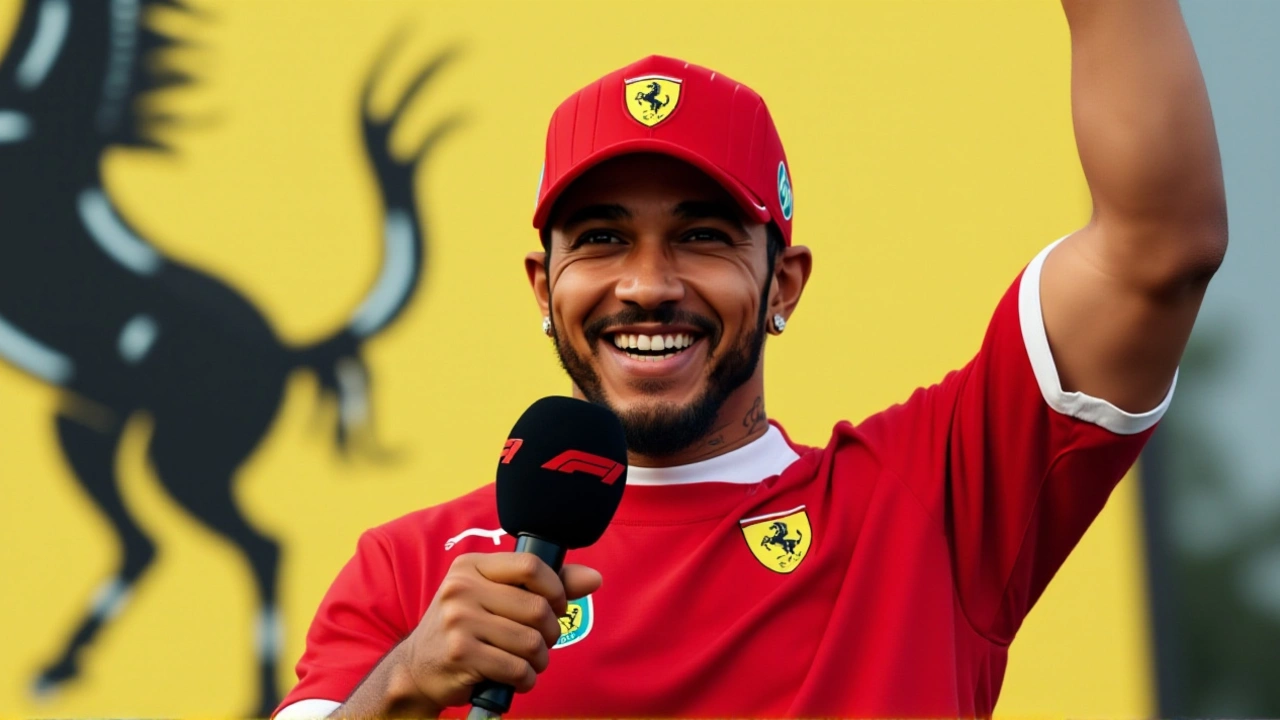

When Lewis Hamilton, the seven-time Formula 1 World Champion, slipped on a Lululemon apron and started greeting customers at a quiet retail store, nobody guessed it was him. Not the woman trying on yoga pants. Not the teen buying running shoes. Not even the manager who handed him a tag remover. And that, perhaps, was the whole point.
He Wasn’t There for the Hype
Hamilton, currently racing for Scuderia Ferrari S.p.A., didn’t announce the visit. No press release. No Instagram teaser. No hashtag. According to reports from Channel 4 FM and ScuderiaFans.com, the shift happened spontaneously — likely during a rare off-day between races. He did the full retail routine: greeting shoppers at the door, removing security tags from leggings and jackets, even tying shoelaces for customers who struggled with the new running shoes. One shopper told Channel 4 FM (paraphrased), “I thought he was just some guy who really liked the brand — until he started talking about Monaco like he’d been there last weekend.”He fumbled a few items. Laughed when a hoodie got stuck on a hanger. Asked customers how their day was going. Made eye contact. Didn’t pose for selfies. Didn’t sign autographs. And yet — the vibe was unmistakable. “It was like watching a race car driver suddenly turn into a barista at 3 a.m.,” said one anonymous customer. “He wasn’t trying to be cool. He was just… there.”
Why This Matters More Than It Sounds
In a world where athletes are constantly selling something — a shoe, a supplement, a lifestyle — Hamilton’s quiet act felt radical. No brand logo on his shirt. No product placement. No corporate handler hovering nearby. Just a man doing a job most celebrities would never consider, and doing it without fanfare.It’s a stark contrast to the high-octane, hyper-branded world of Formula 1. On race weekends, Hamilton is surrounded by engineers, media crews, and security. His every move is tracked. His words are scripted. But here? He was invisible. And that’s what made it powerful.
“The unexpected appearance revealed a relaxed and down to earth side of the Ferrari driver, far from his usual high pressure race weekends,” noted Channel 4 FM. That line stuck because it’s true. We don’t see athletes as people — we see them as icons. Hamilton, for a few hours, became a person.
Customers Didn’t Believe It Was Him — And That Was the Magic
ScuderiaFans.com captured the irony perfectly in its headline: “Nobody believes it’s really him.”That disbelief wasn’t skepticism — it was recognition. People didn’t recognize him because he wasn’t performing. No sunglasses. No hoodie pulled low. No entourage. Just a guy in a black Lululemon tee, helping someone find the right size. One shopper said she asked him, “Do you ever get tired of all the attention?” He smiled and said, “I’m just trying to get my socks dry.”
It’s the kind of moment that spreads organically — not because it’s polished, but because it’s real. No filters. No editing. Just a seven-time champion tying laces and asking, “Do you run in the morning?”
What This Says About Athlete Branding Today
Hamilton has long been one of the most socially conscious athletes in motorsport. He’s spoken out on diversity, sustainability, and mental health. But this? This was different. It wasn’t a campaign. It wasn’t a partnership with Lululemon Athletica Inc.. There’s no evidence he’s endorsed them. No press release from either side. No merch drop. Just a quiet, unannounced act of human connection.It’s a quiet rebellion against the commodification of celebrity. In an era where athletes are expected to be influencers first, competitors second, Hamilton chose to be neither. He chose to be helpful.
It’s also a reminder that authenticity doesn’t need a platform. It just needs a moment — and the courage to show up without a script.

What’s Next? Nobody Knows — And That’s the Point
Neither Channel 4 FM nor ScuderiaFans.com reported whether this was a one-off. Was it a personal whim? A way to reset after a grueling season? A quiet nod to the everyday people who show up for races but never get to meet the drivers? We don’t know. And maybe that’s how it should be.Scuderia Ferrari hasn’t commented. Lululemon hasn’t issued a statement. No videos went viral. No hashtags trended. And yet — the story stuck. Because sometimes, the most powerful moments aren’t the ones we’re meant to see. They’re the ones we stumble into by accident.
Hamilton’s next race is in Monaco. He’ll be in a red car again. The world will watch. But for a few hours, he was just another guy in a store — and for those who were there, that was more memorable than any podium finish.
Frequently Asked Questions
Did Lewis Hamilton work at Lululemon as part of a marketing campaign?
No evidence suggests this was a planned promotional event. Neither Lululemon Athletica Inc. nor Scuderia Ferrari S.p.A. issued any official statements, and Hamilton has no known endorsement deal with the brand. The visit appears to have been entirely spontaneous, with no corporate involvement or social media promotion.
Why didn’t customers recognize him?
Hamilton avoided the typical celebrity trappings — no sunglasses, no entourage, no flashy clothing. He dressed casually, spoke softly, and focused on helping customers rather than drawing attention. His demeanor was relaxed and unassuming, making him blend in with other staff — which is exactly why so many thought he was just a regular employee.
Where did this happen?
The exact location remains undisclosed. Neither report specifies the city, country, or store address. Given Hamilton’s schedule and Lululemon’s global presence (614 stores across 19 countries as of 2024), the store could be in Europe, North America, or elsewhere — but no confirmation has been made.
Has Hamilton done anything like this before?
There’s no public record of Hamilton working undercover in retail before. However, he’s previously engaged in low-key community acts — like visiting schools without security or helping at local food banks. This appears to be his most intimate and unpublicized gesture yet, aligning with his long-standing preference for quiet activism over performative gestures.
How did fans react after the story broke?
While no official social media metrics were released, early chatter on forums and fan pages praised the act as refreshingly genuine. Many compared it to other athletes who’ve done similar things — like LeBron James tutoring kids without cameras — but noted Hamilton’s approach was uniquely subtle. No viral clips. No interviews. Just a story that spread because it felt true.
What does this mean for athlete branding in the future?
Hamilton’s stunt suggests a growing appetite for authenticity over promotion. As consumers grow tired of scripted influencer content, acts of unadvertised kindness may become more valuable than paid partnerships. It doesn’t require a campaign — just a willingness to be ordinary, even when you’re extraordinary.